News & Updates
Stay informed about product launches, industry trends, and company events.
All articles
Static list, so every article is reachable without JavaScript.
Browse by topic: Components and valves (9) · Systems and control (10) · Field diagnosis and maintenance (6) · Industry, selection and buying (7)
Components and valves
Spools, pilot stages, windows and flow forces: why a valve behaves the way it does - and why two valves that look the same are not. Open the topic page →

Why a spool sticks: the forces nobody can see, and the fix that actually works
September 22, 2026 · Technical Guide
A sticking spool is not a worn spool. It is held by a pressure ring, by friction and by dirt in a clearance measured in micrometres - and the fix is.

Why a valve whistles or screams: the edge, the volume, or the supply
September 22, 2026 · Technical Guide
A whistling valve is either cavitating at a metering edge, oscillating on its own flow force, or resonating with the oil volume and line. Three tests.

Why the levers feel heavier on some machines: flow forces, and what they cost
September 22, 2026 · Technical Guide
Every metering edge pushes back on its spool. That force grows with flow and pressure, so it decides lever effort, pilot pressure - and how much of.

One valve body, many spools: why the part number decides the behaviour
September 22, 2026 · Technical Guide
Four choices define a spool: working edges, window shape, centre condition and shoulders. The same casting can behave like three different machines -.

Same valve, different speed: what "the current controls the opening" really means
September 22, 2026 · Technical Guide
A proportional valve controls an opening, not a flow. That one fact explains speed droop, why identical machines differ, and what to measure first.

Three ways a two-stage valve positions its spool - and why the failure modes differ
September 22, 2026 · Technical Guide
Force feedback, direct feedback and spring centring all make a two-stage valve work, and each fails in its own way. Know which one you have before.

Spool valve lap and metering: why the same valve body feels different on two machines
September 21, 2026 · Technical Guide
Lands, working edges, lap and metering area: how the geometry inside a spool valve decides whether a machine feels crisp, sluggish or will not hold a

Pilot stages explained: nozzle-flapper and jet-pipe valves in hydraulic pumps
September 21, 2026 · Technical Guide
Why a pump regulator needs a pilot stage, how nozzle-flapper and jet-pipe designs differ in gain and cleanliness tolerance, and the field symptoms tha

Reading a Kawasaki-type pump code: what K3V112DTP, K5V140DTP and K7V125 actually tell you
September 24, 2026 · Technical Guide
The code on a tandem pump is doing three jobs at once: which family it belongs to, roughly how much oil it moves, and which control or drive arrangeme
Systems and control
Power elements and the loads they drive: matching, speed control, closed circuits, damping and the numbers that decide whether a drive lasts. Open the topic page →

Why extend and retract are not the same: valve control of a differential cylinder
September 22, 2026 · Technical Guide
A single-rod cylinder is asymmetric, so speed and force differ in each direction. That explains one-direction weakness - and why a repair can change.

Swing, travel and the four quadrants: why a motor is not a cylinder
September 22, 2026 · Technical Guide
A motor is symmetric, so speed and flow behave simply - but it works in four quadrants, and in two of them the load is in charge. That is where.

Force against speed: matching the power element to the load, and why oversizing cooks the oil
September 22, 2026 · Technical Guide
Matching means pressure times flow on the hydraulic side equals force times speed on the load side. The envelope and the duty point show what.

Travel and swing drives: three numbers that decide whether a hydrostatic drive lasts
September 22, 2026 · Technical Guide
Charge pressure, case drain flow and control response - measured hot - tell you whether a pump-controlled drive is healthy. How to take each reading.

Speed droop, travel drift and run-away: what a velocity loop changes on a machine
September 22, 2026 · Technical Guide
Open-loop throttle control droops with load and can run away downhill. A velocity loop holds speed until the supply runs out of flow - here is what.

Why a hydraulic function overshoots and hunts: damping, correction and what you can change
September 22, 2026 · Technical Guide
Every hydraulic loop needs correcting: gain buys speed but costs stability, and the damping ratio moves with temperature and air. What an owner can.

Flow gain, pressure gain and load matching: why a bigger pump is not faster
September 21, 2026 · Technical Guide
Flow gain and pressure gain set sensitivity, stiffness and heat. How to read a valve pressure-flow curve, match a pump to the work it does, and spot a

Throttling or displacement control: where hydraulic energy becomes heat
September 21, 2026 · Technical Guide
A valve-controlled system peaks near 38.5% efficiency with a fixed-displacement supply and about 66.7% with load sensing. What the two-thirds load poi

Closed-circuit hydrostatic drives: why travel and swing use pump control
September 21, 2026 · Technical Guide
How a closed-circuit hydrostatic drive works: variable pump, motor, relief valves and charge pump; why it wastes less energy than a valve-controlled d
Four flow controls on one screen: negative, positive, LS and LUDV
September 24, 2026 · Technical Guide
The same machine class can be built with four different pump-control philosophies, and they feel completely different at the levers when the pump runs
Field diagnosis and maintenance
What to measure, when to measure it, and what the reading proves. Noise, contamination, case drain and the habit of testing before replacing. Open the topic page →

Test before you believe: what simulation gets right, what it cannot, and why you must test hot
September 22, 2026 · Technical Guide
Models get flow right and pressure wrong - and oil viscosity changes twelve-fold across the working range. A machine tested cold proves very little.

Hydraulic noise: what the sound tells you, and the order to check it
September 22, 2026 · Technical Guide
Fluid noise and mechanical noise sound different. Pick the frequency band, then work the checks in order: suction, settings, mounts, case drain.

How clean does hydraulic oil need to be? Targets by system type
September 22, 2026 · Technical Guide
Roughly 80% of hydraulic failures start at the oil supply. Here are the particle-size targets by system type, and where contamination actually enters.

Measure before you replace: reading a valve load flow curve, and why you must test hot
September 22, 2026 · Technical Guide
A worn pump and a worn valve look identical on site. The load flow curve plus two measurements taken hot will tell them apart before you buy anything.
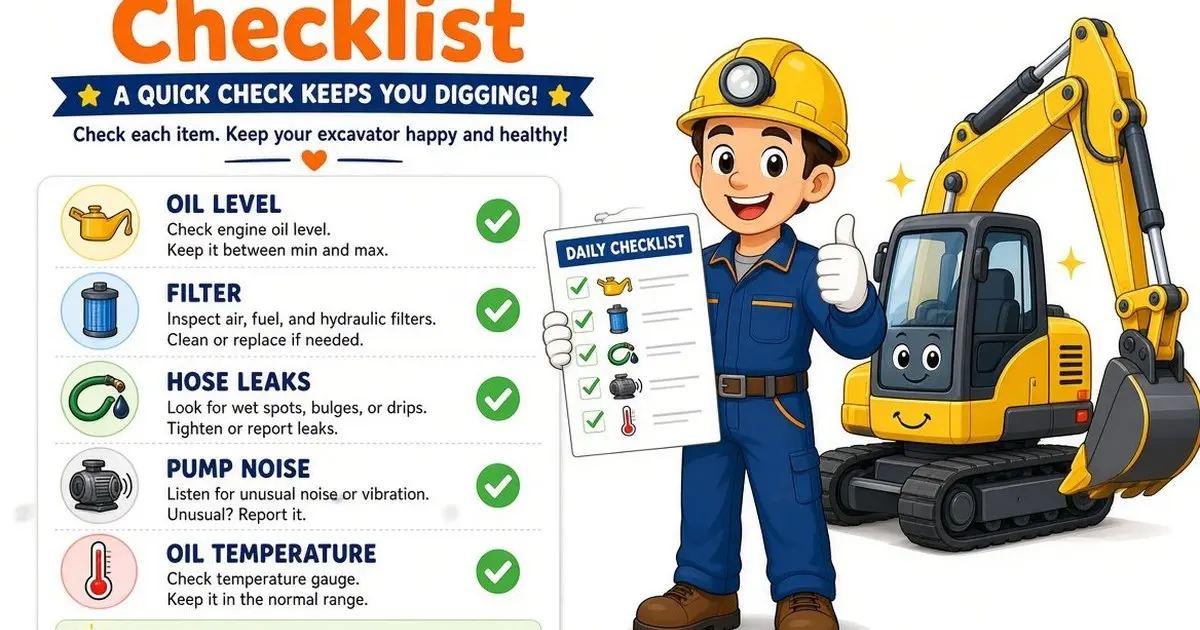
Excavator Hydraulic System Maintenance and Care Guide: From Daily Inspection to Fault Diagnosis
August 29, 2026 · Technical Guide
A complete guide to excavator hydraulic system maintenance — from daily inspection to systematic fault diagnosis. Covers oil cleanliness, temperature

How to Extend the Life of Your Excavator Hydraulic Pump
May 20, 2026 · Technical Guide
Practical maintenance tips: early signs of swash plate wear, proper oil filtration, and recommended replacement intervals for K3V/K5V pumps.
Industry, selection and buying
Where the technology came from, what the industry is betting on, and how to specify a replacement unit so that the part number decides - not the price. Open the topic page →

Why high-pressure piston pumps are built the way they are - and where they are heading
September 22, 2026 · Industry Insight
Pressure classes climbed from 16 to 35 MPa, and every step was paid for at the slipper and valve plate. The 70% rule is what decides how long a pump.

What thirty years of hydraulic industry history means when you buy parts
September 22, 2026 · Industry Insight
Proportional valves and solenoids have been the bottleneck for decades, and the price gap between imported and local parts is a reliability gap.
Buying a hydraulic unit from abroad: five questions that prevent an expensive mistake
September 22, 2026 · Industry Insight
Nameplate first, pressure class second, rotating group third. Most wrong shipments and early failures come from one of these questions not being.

Tube, sandwich, manifold or cartridge: how valve mounting decides serviceability
September 22, 2026 · Technical Guide
How a valve is connected decides how long a repair takes and how many places can leak. Four generations of mounting, and what each means for parts.

The Development History of Axial Piston Pumps: From Early Hydraulic Transmission to High Pressure, High Efficiency, and Intelligence
September 5, 2026 · Technical Guide
Trace the evolution of the axial piston pump — from the 1905 Williams–Janney prototype to today's high-pressure, intelligent units. The article follow
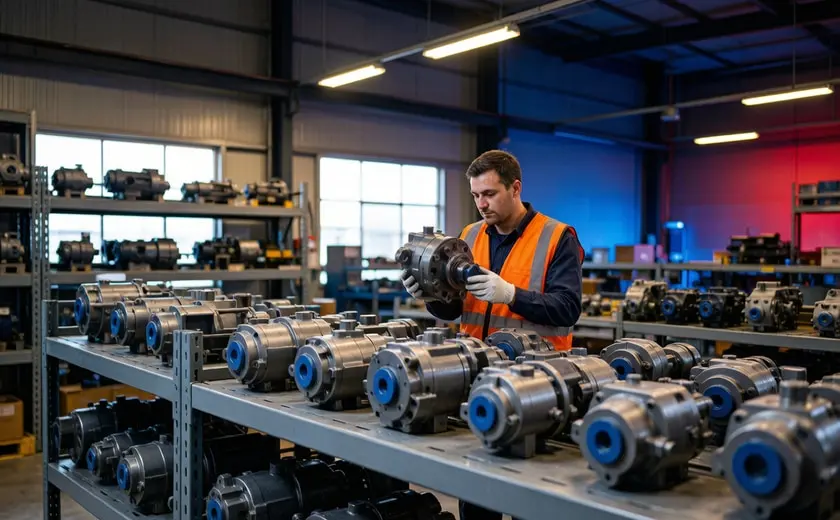
Guangzhou Excavator Parts Market: A Decade of Change, Current Status, and Future Potential
August 15, 2026 · Industry Insight
Guangzhou has grown from the world's largest excavator parts wholesale hub into an export-driven, digitally transforming industrial nexus. This indust

Meet Guangzhou Frank Tech at Bauma China 2026
June 1, 2026 · Exhibition
Visit us at Bauma China 2026, November 24–27.
Looking for spare parts instead? Start from the machine list or the parts library.