
Start with the plate, not the machine
Every enquiry we receive falls into one of two categories: the ones with a clear photograph of the nameplate, and the ones where we have to guess. The first category gets a part number the same day. The second category gets questions - because a pump that fits is not the same thing as a pump that works.
The plate carries four things that decide the order: the model, the displacement and pressure class, the control suffix, and the serial. The suffix is the one people leave out, and it is the one that decides whether the machine behaves as it did before the failure.
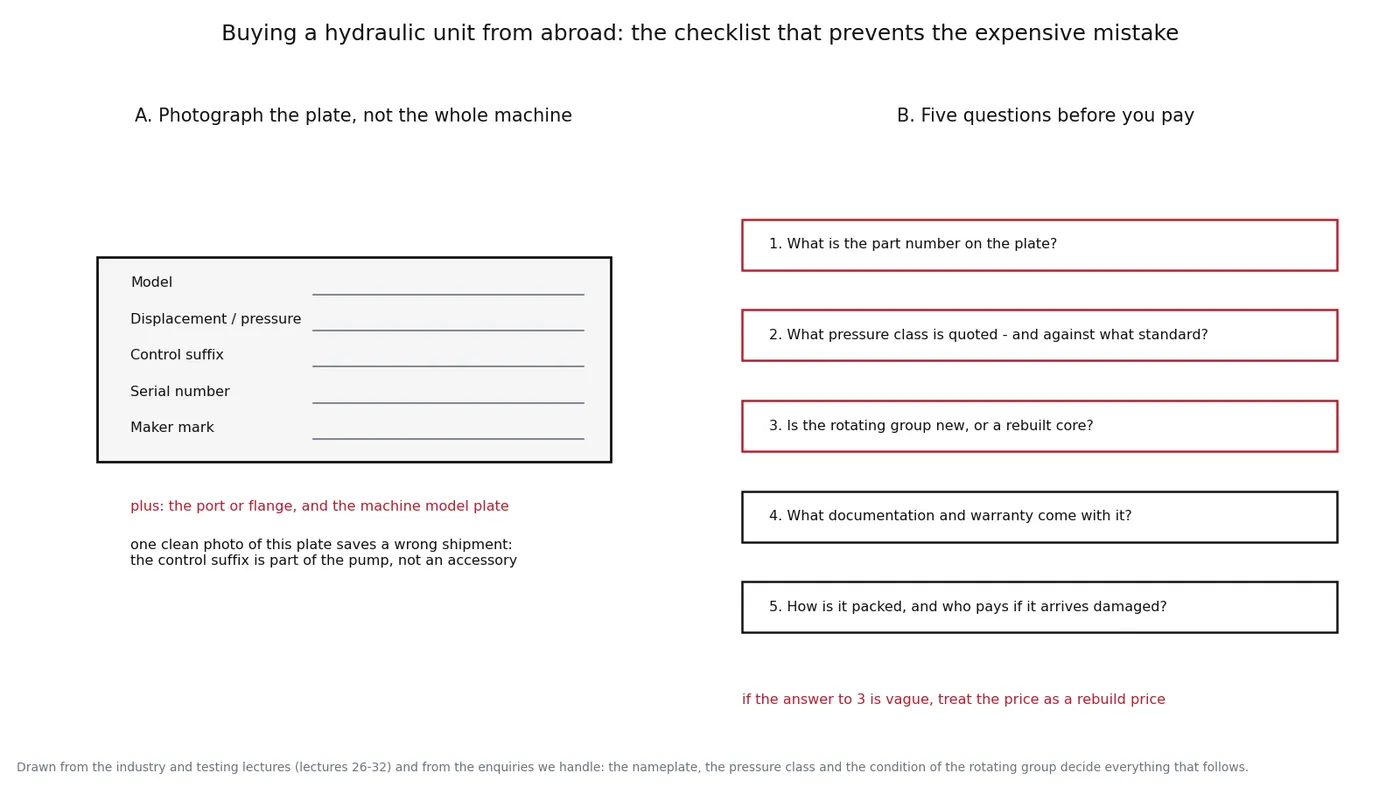
The five questions
- What is the part number on the plate? Not the casting number, not the machine model, and not a photograph of a similar-looking unit. The part number is the specification; everything else is context.
- What pressure class is quoted, and against what standard? "High pressure" is not a rating. Ask for the rated and peak pressure, and for the standard the unit is built and tested to.
- Is the rotating group new, or is this a rebuilt core? A rebuild can be an excellent purchase, but only if you know which it is, what was replaced, and what was measured afterwards. If the answer is vague, price it as a rebuild.
- What documentation and warranty come with it? A test record, a packing list and a warranty that names the part number. Without them, the cheapest quote is the most expensive one.
- How is it packed, and who carries the risk in transit? A pump is a precision assembly with a machined shaft; a unit that arrives with a bent shaft or a cracked flange is a total loss. Agree the packing, the incoterm and the insurance before dispatch.
What to send with the enquiry
| Send this | It answers |
|---|---|
| Clean photograph of the nameplate | Which unit, which control variant, which pressure class |
| Photograph of the mounting flange, shaft and ports | Whether the mating parts match (and which seal kit or flange you need) |
| Machine model and application | Whether the unit was matched to the duty in the first place |
| The symptom, with its temperature dependence | Whether the failure is the pump at all - see the measurement articles |
| Case drain flow hot, if you have it | Repair kit or replacement, which is the whole cost question |
After it arrives
Three habits protect the investment, and all of them come from the maintenance philosophy in our training material rather than from a sales brochure:
- Set the machine to specification - relief and regulator settings from the machine manual, not from the previous owner's habit.
- Change the filter and the breather, and flush if the failure was a fracture. Debris from the old unit is the most common reason a new one fails early.
- Record three numbers: case drain flow hot, standby pressure, and cycle time. Then repeat them next season. That trend is your warranty against the next surprise.
We would rather answer these five questions before an order than afterwards. Send the photograph of the plate and the machine model, and we will confirm the mating part, the seal kit and the pressure class before anything ships.
Related reading: what industry history means when you buy, test before you believe, and the specification sheet.